Rehearsal

Ngaire’s battle with lung disease stretched out over a period of more than twenty years – over one third of her life; and I had the privilege of walking with her through it all. For the first seven there was hope that it may resolve itself, but thirteen years ago, the diagnosis turned sinister – to pulmonary fibrosis – which is always terminal.

Over those years, my role was to love, support, care for, encourage and enable her to walk the path towards wholeness. We looked for healing, from the supernatural to the intensely natural: prayer, whole foods, herbal remedies, naturopathy and everything in-between. Because the prognosis was terminal – usually, at best three to four years – perhaps, in retrospect, there was a measure of healing in some of those. After one visit to Bethel Church in California in 2005, where Ngaire was prayed for, she was completely symptom-free for eighteen months. Two subsequent visits, however, yielded no such fruit physically. All of that is to help paint the picture that this was a long journey, full in many varied and challenging ways.

One of the things that we learnt early on in the process was that the medical profession wasn’t very good at giving you bad news. In many ways, they were often quite brutal and many times we found ourselves clawing our way out of a pit of despair (I should say, however, that Ngaire’s doctor for the last three years was an exception to this experience; we found him hopeful and supportive, even when things went sour).

I found myself needing to be Mr Positive because of this, always pointing the way to the positive aspects, always trying to provide her with an anchor point for hope. The reason for this is the real help that hope provides, emotionally, psychologically and physically. The alternative – despair – soon carves a slippery slope to destruction in the often desperate heart of one with a terminal sentence. Even in her last thirty-six hours, Ngaire hoped and believed that after her sedation and intubation, she would wake with new lungs from a transplant. I am relieved that that was in her heart rather than hopelessness and despair.

Of course, my own personal journey was different. I purposed to maintain her hope, but would, myself, at times, visit dark places, writing of hopelessness and the feeling that my days were a rehearsal for what life would be like without her. This would happen particularly when she was convalescing elsewhere or on one of her several hospital visits. Without her presence in the house, the whispers would often be that my actions of preparing meals, doing washing and ironing, making lunches, organising cleaning rosters amongst the boys, were all practice for the future when she would no longer be with us.

I couldn’t talk to her about this, which is more difficult than I can tell. In almost everything, Ngaire and I would seek each other’s opinions, thoughts and feelings. I think the word that I used in an earlier blog was symbiotic. Since we remarried in 1991(for those of you who don’t know, we were separated and divorced for five years – that’s another blog), our marriage was totally different. We had almost a singularity in our approaches to things. We would use ineffectual words like “team” and “agreement” but it was much more. I cannot tell how many hundreds of times I would pick up the phone to call her and she would be calling me, and vice versa; we would often be jointly thinking of the same things or people and begin to speak about them together at the same time.

Much of this kind of thing is not uncommon in close marriages, but we had fought some hard-won battles to bring us to where we were. Part of our remarriage vows said, “I give my life to you as an open book”. Now, here I was with all of these feelings of hopelessness and despair, and I was unable to tell her, because I knew that it would be destructive in her physical battle. One of us needed to be paddling the boat, and that was usually me. I have learnt that this is often what happens to a carer. I saw it in my own father as he took care of my mother through many years of Alzheimer’s. Despite my urging he found it difficult to open up about his struggles – which were deeply evident in his demeanour – and mostly kept it bottled-up, to his and our great detriment; he died shortly after mum. However, I am immeasurably grateful for those few friends in whom I could entrust the deep, dark things, who supported, prayed and help strengthen me for the road.

So where does faith sit in all of this?

Over the course of Ngaire’s illness, faith changed shape enormously. In fact, to enlarge the metaphor, it became an almost unrecognisable monster at times, as we waded through the mud of “unlearning” what faith is.

As an aside, I am bemused by atheists, some of whom are my friends, who in their own “evangelism” presume that I, or others who think similarly, have not grappled substantially with these issues of the existence of God. It is arrogance to presume this and flawed thinking to not allow another possibility. What is the difference between that and a rabidly fundamentalist Christian? I digress.

Let me tell you some of the things that I believe I have discovered about faith:

  1. It is not about me having an expected outcome.
  2. It does not dictate that I must badger God until he gives me what I want.
  3. It is not about having an expectation that everything will be peachy.
  4. God is far bigger than any box that I may create for him or indeed, any understanding to which I may come.
  5. God can do things any way he likes.
  6. Suffering is an integral part of the journey to joy.
  7. It is O.K. to doubt.
  8. Faith is purified more by unanswered prayers than answered ones.
  9. Yes, I am loved.

I was talking earlier about Ngaire’s and my closeness. I don’t want to give the impression that it was all sweetness and light. To reach the gold you have to dig the dirt; at times we could be downright abrasive with each other: I have some memorable journal entries! But, generally….mostly…..entirely…we were deeply in love.

I wrote this about eighteen months ago, after we returned from California; Ngaire had taken a downturn and was staying at our friend, Moira’s, place.

It is the Oneness

Unwell, she convalesced in another place

Alone, deep in the night,

I stirred beside her, felt her warmth

And the air move past my face from her breath,

Tenderly, we enmeshed the arms and legs

Of our souls in gentle embrace,

And communed.

From the other possibilities of mind-time,

I called myself to reason, lying suspended,

Sliding around consciousness.

That reason again challenged life

That this is a dream,

That she is not here,

That I am alone.

I turned my back and swung my feet to the floor,

Melancholy in such sudden solitude,

Until the voice of resonance

Within informed me,

It is the oneness.
Opinions are like…..

O.K., all of us get spam daily. One of the things I loathe about coming back from a day or two away is having to go through and delete a couple of hundred solicitous emails. Many of them come from an online art workshop/school/supplier from which Ngaire received hard copy and email magazines and “how-to” publications.

I have reached a point where I’m O.K. with deleting these now, although it was difficult to begin with – it was a point of contact – connection – with her. Yesterday was different.

Whereas, I normally don’t engage with these emails at all, a particularly beautiful watercolour painting of a wilted rose caught my attention. I read the accompanying article, which ultimately was selling a magazine about painting flowers in watercolours – which Ngaire could easily have written herself; she was so accomplished in watercolour and had used flowers as her subjects since before I knew her. From fields of wildflowers to individual flowers in vases, and everything in between, Ngaire was proficient and prolific.

Now, I know that I’ve written about flowers before, along with those aspects of grief which relate to discerning how much of me is me – after being united with someone for seventy percent of my life, there is a melding between two souls that makes it almost impossible to tell where I end and she begins, if you follow.

But seeing the picture of the rose prompted something a little different. You see, I had learned so much about art, observation and appreciation from Ngaire that I could honestly say that these were now my abilities. However, she was the artist. Oh, I’m not too bad at drawing, but any opinion that I had about art really had its credibility in the fact that I was married to Ngaire, and she was the authority.

It’s like the little kid in the playground, telling his friends how badly made the schoolhouse is. They all give him a hard time until his Dad picks him up, wearing a hardhat and tool belt; suddenly, the little kid has credibility (even though his opinion may have been correct anyway).

I love art – well, not all art; the pragmatist and communicator in me draws the line at some things. But what it feels like now is that the artist in me, has gone; my credibility has gone in this area and I have to come up with some personal validity. Like the radio shock-jock who finds himself unemployed, I now have to dispense with my opinions and come up with some substance.

Of course, this is not earth-shattering for most of you who read this, but I cannot express to you how vital vision, perception, observation and appreciation were in Ngaire’s world, and consequently, my world. So now, I’m just another guy with an opinion. At least, that’s what it feels like. She lived and breathed beauty and appreciation, and she was grateful for all of it, almost every day.

Image

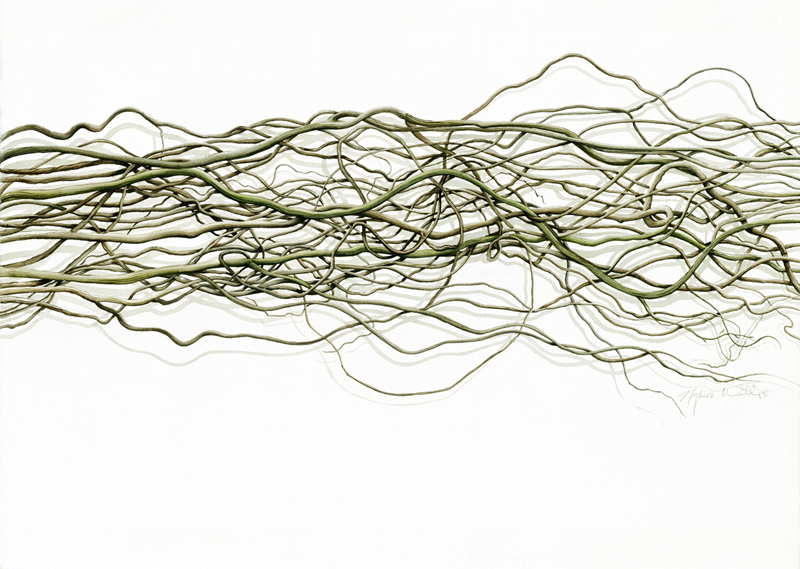
The Journey – watercolour – Ngaire Wills

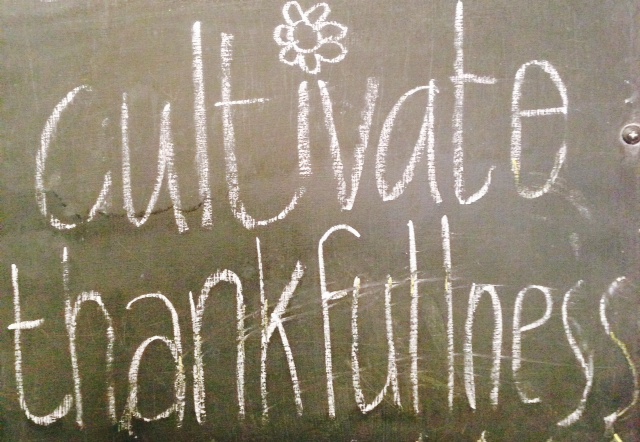
A legacy is on the chalkboard in our kitchen. One day, a little over a year ago, she wrote, “cultivate thankfullness” – replete with the usual artist’s spelling mistake – she, who had battled a debilitating and ultimately fatal condition for so long left a reminder to cultivate thankfulness.

In fact, if I could nail it down to two things, Ngaire’s benchmarks were a) to be thankful and b) to avoid comparison. The comparison thing was a real soapbox for her in recent times, because she had seen it damage others’ lives and the lives of those around them. “But, of course”, as she would say, “if you’re thankful, you won’t compare yourself to others anyway.”

So, that’s probably a good place to end. Opinions become far less vociferous when they come from a grateful heart, anyway. And I am grateful for every day that I spent with my girl.

That can be my opinion…..and my credibility.

Image

Poor Air Quality

It is mid-Spring here in Sydney. Summer is still six weeks away and yet there are over sixty bushfires burning around our state. The worst is uncontained and only an hour’s drive west. Over two hundred homes have been lost so far, fifty in my friend Shelley’s street. Her house is OK, but many of her neighbours who lost theirs, were uninsured. Their trauma and grief must be overwhelming.

I heard of one dear woman, with young children, who had recently lost her husband to cancer. Her house and all possessions were destroyed by fire. Every item, image, gift, note or piece of clothing that I still have the time to ponder, caress and treasure in my loss, has been taken from her and her children in the most terrifying of circumstances.

Where I live, the air smells of the burning; there is a heavy, smoke haze over the city, and the sun is an orange ball. Emergency reports are broadcast every half-hour on the radio – more in high-danger periods – and the weather reports end with, “The Weather Bureau warns of poor air quality; all those with asthma or lung conditions should stay indoors.”

Of course, when I first heard that, in this recent spate of fires, my immediate response, as I was driving, was to reach for the phone to warn Ngaire to keep the windows shut. Now, I expect it at the end of the news bulletin, but each time I hear it, it is like a fresh wound.

You see, that was my role: to care, look out for and protect my girl, more and more as the years rolled on. I realised that the pain in hearing this weather warning, however, was not in the reminder, but in the revelation that my ability to demonstrate my love in care and protection, which was so central for so long, has been taken from me. I weep as a write this, because this loss leaves me not only bereft of what was my most important role, but also of a place to put that which I have had prepared for so many years: my perpetual love, care, devotion, consideration and tenderness.

Like the mother whose children are gone, who lovingly prepares meals and waits, like the old man who has been suddenly retrenched after a lifetime of devotion to his job, I wait; I stare; I ponder; I search for that warm place where all this love can find its perfect resting place, but it has gone.

Obviously, the old man, if not beyond it, can be retrained, or find a new direction in retirement; the mother can receive her friends to help share her loss and her meals. But these things are all different shapes.

I am grateful for my friends and my boys, who daily help and receive help themselves, for I am far from alone in my loss. I am grateful, too, for this blog and those who, going through similar things, find comfort, solace and – dare I say – even enlightenment through it, especially those who are struggling to find the words for how they feel themselves.

As I said a couple of blogs ago, this process is all about being in and going through. Because of that understanding and the fact that I am gradually feeling stronger and healthier, I have an almost perverse gratitude for these confronting realities that, almost daily, present me with a different aspect of loss that I can then “gird up my loins” and begin to walk through. There is a strange wholeness in it and, deep within me a growing peace. I don’t expect that I will ever “get over it”, but nor do I want to.

Another poem to sign off:

Upon Retiring 

The guests have gone,

My children in bed;

The echoes of laughter

And conversation are suddenly

Stilled; their shadows,

Like those of silent undertakers,

Skulk on the periphery as,

Teeth done, ablutions done,

Pyjamas assumed,

I stand surveying the bed

That we once shared.

All is silent as I reach

For the lamp-switch, then

Pause before I flick on the radio;

In my memory, I strain to hear

The sound of your breathing,

Your voice, reach to feel your warmth,

The touch of your face, your hand,

See the grace in your eyes,

Your countenance, feel

The love in your presence,

An anchor-point for my soul

Now adrift. Like a storm-swell,

My need arcs up and towers over

The loss and vulnerability

Of my prostrate spirit

And face, misshapen in grief

And tears at your absence:

The queen, who ruled my heart,

Now lost to a kingdom

Beyond my reach as

The radio’s vacant banter

Takes your place.

P1010020

Associations

Perhaps I’ve touched on this before, but it follows on from last time. I was driving to work the other day when “Georgia” by Boz Scaggs came on the radio. Within a few bars I was a blubbering mess, not because the song held any special significance for Ngaire’s and my relationship, but because it was a song from an album that evoked the era in which we established our love for each other. In fact, the album was released that very year. They were the years of our late teens, full of passion and life, with the world and our destinies before us.

The first night that we went out together – May 3rd, 1976 – I brought her back to my parents’ place for coffee (they were overseas at the time). As we sat at the kitchen table, I recall so clearly that we both felt that a sudden shift had taken place in our reality and we were each staring into the eyes of the one we would spend the rest of our lives with. It was an amazing, profound evening.

It was also a time of powerful emotions forging the foundations of our lives together, and a time of great music. I did a bit of a web search and compiled a far-from-exhaustive list of artists from that era. When I saw the names and remembered the great music, it kind of made me understand why so many of us old-timers are a little underwhelmed at the general state of music these days. Look at these names of the ‘70’s:

Bob Marley, The Pretenders, Roxy Music, The Doobie Brothers, Boston, Neil Young, Carly Simon, John Lennon, George Harrison, Elvis Costello, Elton John, Thin Lizzy, Queen, Fleetwood Mac, Santana, Blondie, Deep Purple, Rolling Stones – in their 2nd decade, Gladys Knight and the Pips, Rod Stewart, Marvin Gaye, Led Zeppelin, B-52’s, Abba, David Bowie, AC/DC, Bruce Springsteen, Stevie Wonder, Pink Floyd, Talking Heads, Wings, Michael Jackson, The Ramones, Donna Summer, James Taylor, The Knack, Jackson Browne, Billy Joel.

As I sobbed my way through the traffic, it didn’t help to drift in my mind from song to song of that era that I won’t be able to hear again without the associations of that love, passion and life that put their indelible stamp on so many great tunes that we listened to over and over. Now that she is gone, the intimacy of those associations is no longer shared; the memories that each evokes are now mine alone, and it underscores the loneliness and loss.

Of course, music has an incredible ability to evoke memories. My parents’ “song” was Moon River and even now, many years after they have gone, I find myself drifting into melancholy whenever I hear it.

Smells are the same. Ngaire had a favourite expensive Estée Lauder perfume that she wore on our first date. I bought it for her from that time on; she never ran out. Someone wore it the other day in a shop in North Sydney and I made a hasty exit, choking back an involuntary sob.

I must sound like I’m crying all the time, but it’s only these moments now, although they do have a way of hitting when I least expect it. And I’m sure that these associations will be the things that will make getting over losing Ngaire that much harder and yet, they are a tie that we alone shared and I don’t want to ever find that they become just another memory.

I bought the Santana album, Amigos right around the time that we first went out; our “song” was an instrumental, a powerful, majestic lead guitar break from the album called, Europa – Earth’s Cry, Heaven’s Smile. Strangely fitting……


In and Through

I went to dinner with some dear friends last night and, as we were leaving, Gary asked me when the next installment of this blog would appear. I said that I didn’t have anything to write about at the moment. As I drove home, I began to realise that it wasn’t true.

For people walking the road of grief and loss, I suspect the issue is not that there may be times when you have nothing to say, rather that you actually have a lot to say, but not the words. This surely is an aspect of the deep pain.

I went to sleep reasonably early but woke just before 2.00 a.m. This is not entirely uncommon, but I was hoping for more rest than three and a half hours. As I tried to get comfortable, I made a small, gentle movement with my hand to draw the sheet closer to my chest. I suddenly became aware of it being a “Ngaire” movement. Maybe this sounds odd, but I felt it to be one of those “the-two-shall-become-one” moments that I have talked about before. When such things happen, I find that I am instantly undone, hence sitting writing this now at 3.33 a.m., after too long of trying to get back to sleep.

You see, what I am finding about grief is more along the lines of what C.S. Lewis said in A Grief Observed: “No one ever told me that grief felt so like fear”.

In the dark hours particularly, the loss feels like a deep, penetrative disturbance in my being that has no ready connection to the rational. I become anxious, a little unsettled in the stomach – like Lewis, I keep on swallowing – I have to get up; to try to sleep is utterly pointless. I quote from my journal of September last year:

In terms of my identity and the things that drive me, my compass has her as north. I live to please her, to make her happy, to have her respond to me. For that to be gone would be to lose my reason to exist. I suspect that that is why grief feels like fear, because it is; and it is a dark, unholy place.”

Such moments have become less over the last while. Strangely, they were more common in the year before Ngaire died. Her condition was so perpetually confronting that no matter how brave I appeared on the outside, within was a soup of confusion, dread and fear mixed with hope and, of course, love. The grieving began long before she went.

In contemplating the vast ocean of humanity that has suffered in grief as I, my boys and Ngaire’s close family and friends are now, I feel quite insignificant in the context of history. Despite what the humanistic self-theorists say, despite what the preacher may tell us about our importance, there is a vital understanding in this “insignificance.”

The reality is that, in this world of seven billion people, we are very small; beyond our family and the worlds of those who love us, we are, most of us, of little consequence. The author, Henri Nouwen calls it “smallness”. I like that because it is in this smallness that help arrives, if we ask for it. He goes on to say that only when we invite God in to the pain can we live fully through it. That is one of the reasons I write this blog: to engage with God in the pain to find the right way through it. As Nouwen says, “The way out of grief is in and through.”ı

In our western world, we have highly developed systems and processes designed to help us avoid pain. Consequently, our learned tendency is to deny, avoid, suppress and medicate. Sadly, all we have ended up with is a society that is largely unprepared for many aspects of life; unpleasantness and the tough stuff of relationships are often ignored or left unresolved until the pile of crap becomes too high. Then, we decide, it’s time to move on. “I don’t love you anymore” or “you’re not the person I married” are some of the ways we speak out our justification for not engaging in life.

We also “medicate”. Believe me, I know about this one. Sadly, we think that all we are doing when we use medication is numbing the pain. But, as social researcher and speaker, Brené Brown says, you don’t just numb the pain; you numb everything2: your ability to love, experience joy, build caring relationships and empathise. Whatever your drug of choice is, from alcohol, through to prescription drugs and even food, you numb your ability to be in life.

Don’t get me wrong; I’m not being a wowser. Those of you who know me will know that’s definitely not the case. All I’m saying, from bitter experience, is when you use anything as a means of numbing the pain, you also numb your ability to engage in life, with all of its beauty and ashes.

Anyway, that was a very protracted way of saying that I am discovering that the best way out of this pain is in and through. Of course, I’ve had times of drinking too much, as a means of escape, but it is not my ongoing mode of operation. I want to get this right. Maybe what this whole thing is saying is, we only get one shot at this life, so for our sake and the sakes of those who love us, let’s do it right.

Thus endeth the sermon. One thing I wanted to add for those of you who might be going through something similar, is that because of the long period of grieving over the last couple of years, I feel that the grief itself is diminishing somewhat; the dark times are not so regular, and now the issue for me is one of loss. My precious one is gone.

I have started making a list of things that I miss about Ngaire and have found it difficult, poignant, beautiful, funny and heart-rending. I want to share some with you:

Things I miss about you


–             Seeing you in the morning sun, looking out on the beauty from our bedroom window

–                    Watching you paint in your studio, while I write

–                    Making you cups of tea that you never finish

–                    Standing, holding you

–                    Finding things that you mislaid

–                   Making you fresh bread and mortadella sandwiches with tomato sauce and you, every time saying, “Oooh, my favourite!”

–                    Your beautiful thoughtfulness

–                    Praying for our boys together

–                Ringing or texting whenever I see something that I know you would love or be interested in.

–                    Your cute sketches of things that you’re trying to describe.

–                    Sharing chocolate-covered aniseed rings

–                   Putting my hand on your leg while driving, and you putting your hand on mine

–                    Looking into your beautiful eyes

I don’t suppose the list will ever end.

ı Henri Nouwen, Turn my Mourning into Dancing

2 Brené Brown, The Power of Vulnerability

How much is me?

Walking through the markets yesterday morning, I spotted some beautiful waratahs at a flower stall. Up until a few years ago they were a protected species – possibly still are – and weren’t readily available. So seeing them at market stalls for a reasonable price is a whole new experience.

The point for me, though, was when I was walking away with my waratahs and began thinking, “When did I become a guy who appreciates beautiful flowers?” (In fact, I stood for a while pondering whether or not to buy some stunning dusky-pink roses; I decided against them but I have to say, without good reason).

So as I cradled my purchase in my arms and wandered amongst the hand-crafted breads, fresh produce, coffee, home-made cakes, and meat from almost any creature you could think of – including alpaca – I thought back to how I was, in what seemed like my two-dimensional-days before I met Ngaire. I found it hard to remember.

You see, I always had an appreciation for beauty, but she had a passion for it. I think I could safely say that, thanks to that passion, I now love good art, architecture, design, and the stunning extravagance of nature in sky, landscape, plants, creatures and all their individual elements: clouds, mountains, leaves, feathers….  and flowers. She was also my muse, the one who was my great encourager, inspiration and sounding-board for all of my creative pursuits.

I don’t know that anything of me had as much influence on her, perhaps some. I think degree of influence relates to mutual love, respect, and familiarity – even admiration. I remember, as a small boy watching my father, that I thought to myself, “I really like the jaunty way he moves when he’s walking.” So I began to emulate him. The older I get, the more I remind myself of him. Likewise, I see in my boys some of my own characteristics – and sometimes they annoy me.

The next question that follows is, “How much of who I am, is me?” Now obviously, I am entirely me; but we are all, to an incredible extent, an agglomeration of the influences of our friends, teachers, parents, partners; even our children can have a profound influence on the shape of who we are. This doesn’t even account for the trauma that so many suffer which also goes into the mix.

But when so much of who I am has been shaped by her in an almost-ongoing symbiosis for so many years, how do I find the me who functions and has sole thoughts and individual purpose without her? This may seem unnecessarily existential but bear with me.

It occurred to me in my pondering, that so many of my choices in the past were fashioned out of a desire to bring her joy, please her, or engage her more. Now, without that impetus, I cling to tenuous frameworks like going to work, cooking dinner or doing the washing; even looking after my boys is fading as they are now all older and making their own way, as it should be. Suddenly, irrevocably, it is no longer Matt and Ngaire – the unit. It is just Matt. And, as I said in a recent poem, “[The grace and love of her] presence, [was] an anchor-point for my soul, now adrift.”

You see, while I wondered at the mystery, I think that deep down I had an idea that this whole “the two shall become one” thing, was just a metaphor. It is clear to me now that it is not. In fact, to add to it, I would say that it seems to me there is an ongoing imperative when two spirits are united – that they will continue becoming one while they live.

It is as though the house that was Ngaire and Matt has been half-demolished, and I stand in my half, amongst rubble and torn plaster looking into the void. Within the half that remains there is strong evidence of her everywhere, for the house was as much hers as mine. So, almost feeling like a squatter now that she is gone, I contemplate the rebuild. In being exposed to the elements so, the stuff of life becomes more tedious and difficult. But, I have many who love and support me to help with that “project”.

However, in the midst of this, I think of those who are refugees or destitute on our own streets who have suffered unbearable loss through persecution, war or personal trauma – whole families in many cases – and it can be seen on their faces: a tragic empty pain that only love and time may help to heal. It angers and saddens me that many in our society have forsaken compassion and mercy for the “first world values” of hedonism, selfishness and misguided self-protection. But I digress.

For me, of course, there is truth in the line, “’Tis better to have loved and lost than to have never loved at all”. It comes from a very long poem of Tennyson’s, written over a period of many years, after the death of a close friend, and is to be ventured into at your peril, for it delves into the dark places of the soul. Having said that, one of the central themes in the poem is the ongoing search for hope after loss:


O living will that shalt endure

When all that seems shall suffer shock,

Rise in the spiritual rock,

Flow thro’ our deeds and make them pure


That we may lift from out of dust

A voice as unto him that hears,

A cry above the conquer’d years

To one that with us works, and trust,


With faith that comes of self-control,

The truths that never can be proved

Until we close with all we loved,

And all we flow from, soul in soul.


– Stanza 131, In Memoriam – Alfred, Lord Tennyson


This is a worthy journey.

Condolences

Condolence – noun – an expression of sympathy with a person who is suffering sorrow, misfortune or grief.

It’s a strange word and one that you don’t usually hear at any other time. That’s one of the things that I love about English; you can have a hundred words that are nuances of basically the same thing, but, usually, if you really need it, there is also a word that means exactly what you’re looking for.

“My sincere condolences….”

It sounds so formal and unnatural, probably because everything about death and loss is so foreign to how our lives are structured. I have had many different expressions of sympathy from many people over recent weeks. All have been appreciated. It’s interesting, though, that the ones that “touch” deepest are the simple ones. A mate said to me the other night, “I really have no idea how you must be feeling. I cannot comprehend it, but I am so sorry.” Oddly enough, that meant so much more to me than someone who may be offering comfort from a philosophical/ideological/spiritual viewpoint. Not that those aren’t appreciated, it’s just that, before Ngaire died, I had my own viewpoint, which would, in many ways, have looked or sounded just like many of the expressions that I have received. But really, my mate was right.

Along this road, I have experienced a lot of death. The ones that touched deepest were, of course, those closest: my mother, father, and before Ngaire, my brother’s death was the most devastating. However, though Ngaire’s passing was a possibility that was never far from my thoughts over much of the last few years, there is no comparison with anything that I have experienced before.

“….and the two shall become one flesh.”

There’s the difference; the other losses were just that: tragic losses. But this is like a disembowelment of the soul, the sundering of a union formed at the deepest level of being, so there are not many words that can come close to easing that. I also feel ashamed that I have been oblivious to the pain that those friends and loved ones who have lost partners must have endured. Then again, how could I possibly have known?

I am honoured that people have bravely ventured into that territory with us, though. Some have written letters, cards, sent emails, flowers, boxes of fruit, delivered meals, invited us for meals – so many expressions of love, for which I am immeasurably grateful and which have been a balm. In fact, without them, this journey would be bleak and dark indeed. Thank you.

As time draws the slow separation which gradually begins to make the loss manageable, the staggering and daunting realisation is that there is no going back; everything is new, and life – lives – must be rebuilt. I left a friend’s place last night, after dinner and, as I went over the evening’s conversation, began to fashion in my mind how I would tell Ngaire about it when she came home……but that will have to wait.

Here’s a poem about another aspect of life now:

The Estate

  Apparently now you have an estate,

Or so some letters are addressed.

They want to tidy things up

While I want to keep things going.

But when I read your name on other dispatches

From The Chamber Orchestra, the Art Gallery

Or even the bank, it tells me that you are

Still here, still interested and full of life.

The Art Store, the Fabric Store tell me

That you are still creating, flowing in love

Living in all that meant so much to you

And others, not silenced

But juvenescent, absorbing journals

And how-to mags, always thinking

How to bless, honour, bring joy

Through word, gift or effort.

Those who received show where

Your true estate lies; those whose

Lives were changed, enlightened,

Warmed are those who, part of the larger

Domain of grace and light, walk now on land

Reclaimed, with hearts imbued

With hope and worth, who feel the loss,

Not as that to be tidied, but as a precious seed.  

Image